Same rules,
one number change
'Low temperature' isn't a new thing
'Low temperature' isn't a new thing
Boiler and heat pump systems suggest very different skill sets.
One works at high temperatures, the other at low temperatures. One is usually on and off, the other is on continuously with a set back.
These differences are enough to make you think you need to relearn the job.
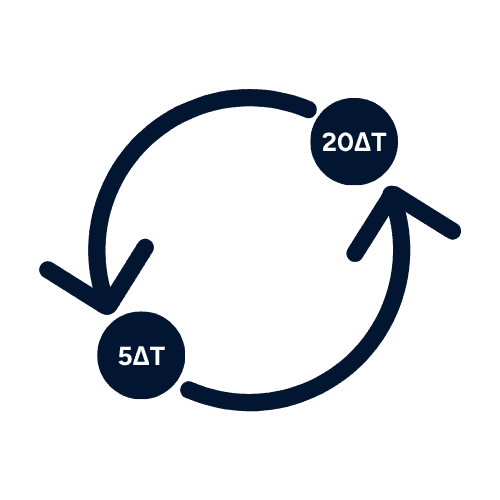
The reality is they're the same system and the same rules, with one number change: ΔT.
Boilers typically run at 20°C ΔT. Heat pumps typically run at 5°C ΔT or 7°C
At 5°C ΔT, each litre of water carries a quarter of the heat it does at 20°C. So you need four times the water to deliver the same heat.
More water, more resistance.
Some can, some need adjustment, some can't.
Pipe size alone won't tell you. If you guess you risk higher costs or avoidable problems.
Every heating system follows the same connected rules.
It's the heating engineer's job to create the right system conditions for the heat demand, but that's hard if no-one's told you the rules.
This ebook strips the hidden system logic back to basics, giving you the missing starting point that underpins everything you learn next.
The ebook is the start of your journey to systems thinking.
A journey that pays for itself over and over.
Less time on hold to technical. No throwing parts at the problem. More jobs, right-first-time.
The rules of hydronics explained, simply!
Introduction to systems thinking - it's all connected
10 Step Hydronics - finally, a practical process for any job.